



Product Categories


Sheet Metal Seam Tracking & Seam Finding Sensor
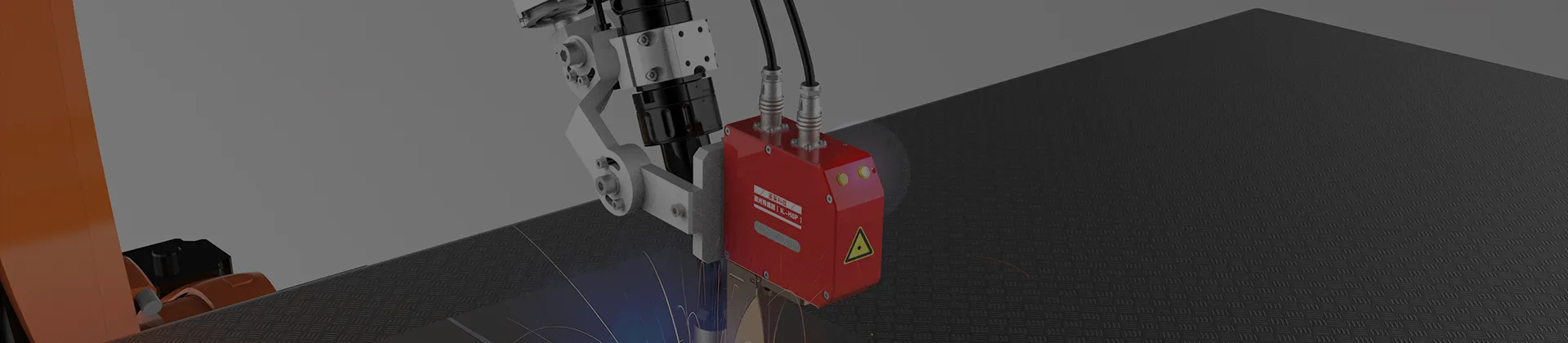
Featuring high detection accuracy, fast seam tracking speed and high reliability, and adaptable for laser welding, MIG welding and TIG welding of different sheet metals, the Welding Seam online Tracking & offline Finding Sensors for sheet metal developed by Intelligent-Lase have been widely used in various industries, including sheet metal box, pipeline, vessel and kitchenware and enclosure.
Intelligent Laser’s Sheet Metal Seam Tracking Sensor and Sheet Metal Seam Finding Sensor are advanced laser vision systems designed for high-precision detection and real-time correction of welding seams in thin sheet metal applications. These sensors utilize cutting-edge laser triangulation technology to capture 3D seam profiles, enabling industrial robots or automated welding machines to adjust their paths dynamically during welding.
High-Speed Tracking:Detects seam deviations in real-time, ensuring weld accuracy even at high travel speeds.
Wide Compatibility:Works seamlessly with MIG, TIG, and laser welding processes for carbon steel, stainless steel, and aluminum alloys.
Zero-Gap Detection:Capable of tracking gap approaching 0mm, ideal for precision sheet metal fabrication.
Adaptive Control:Integrates with robot controllers (e.g., KUKA, FANUC, YASKAWA) to modify welding parameters (voltage, wire feed) for optimal bead formation.
Pre-Scanning Functionality:Offline seam finding mode allows path planning for complex geometries before welding begins.
In tracking mode, the sensor reads the joint continuously while welding is in progress, feeding real-time position data to the robot controller so the path adjusts as the part heats and shifts. This matters more on thin sheet than almost any other material category, because the deformation happens during the weld itself, not before it. A sensor that only checks the joint once before starting will miss the drift that happens halfway through a 1mm seam. Continuous tracking keeps the bead centered even as the sheet moves, which is what keeps thin-gauge welds from burning through on one side and missing the joint on the other.
In finding mode, the sensor scans the joint before welding starts, which is particularly useful for sheet metal because most thin parts are stamped, bent, or pressed rather than machined — and stamped parts carry more dimensional variation from one unit to the next than machined components do. Seam finding picks up that part-to-part variation and corrects the robot's path before the arc or laser starts, so the weld begins exactly on the joint instead of slightly off it. This offline correction also supports pre-scanning for boxes and enclosures with several short seams, letting the path for all of them be planned from a single scan instead of teaching each one individually.
Unlike our Zero Gap series, which is built around the extremely narrow joints found on thick-walled pipelines and pressure vessels, this series is built around thin material that happens to produce near-zero gaps as a side effect of how it's formed and fitted — sheet metal box seams, folded corners, and enclosure joints are routinely assembled with little to no visible gap. The sensor is tuned to read these tight, low-contrast joints accurately while still tracking at the higher travel speeds that thin-gauge production typically runs at, so accuracy doesn't come at the cost of cycle time.
Galvanized steel, stainless steel, and aluminized sheet are common in sheet metal box, enclosure, and kitchenware production, and all three reflect light in ways that can confuse a camera-based sensor. The anti-interference algorithm in this series is built to filter out that reflective noise along with normal arc and spatter interference, so the sensor keeps reading the actual joint instead of a glare pattern on the surface.
This series supports laser welding, MIG welding, and TIG welding on carbon steel, stainless steel, and aluminum alloy, which covers the typical mix of processes used across sheet metal box, pipeline, vessel, kitchenware, and enclosure production. The same sensor and communication protocol carry across all three processes, so switching welding methods between projects doesn't mean switching sensors.
This series communicates with more than 40 robot and controller brands, including KUKA, FANUC, YASKAWA, ABB, Panasonic, Staubli, OTC, UR, and JAKA, and can adjust welding parameters such as voltage and wire feed in coordination with the robot controller for better bead formation on thin material.
Let Us Provide a Professional Solution for You Today
Our experienced team can provide customized service to all kinds of projects. Also, we provide 24/7 aftersale service.
Our aim is to make sure all customer can use the laser sensor after receiving it instead of put it in the box.