



Project Categories


Steel-plastic complex pipe

High pressure gas tank

Air pump cylinder

Pressure Vessel Tubesheet


Pipe and pressure vessel welding requires accurate control of the real weld joint, especially when workpieces vary in roundness, fit-up, wall thickness, tack position or fixture location. In automated production, a robot or special-purpose welding machine cannot rely only on a fixed programmed path when the actual seam changes from one part to another.
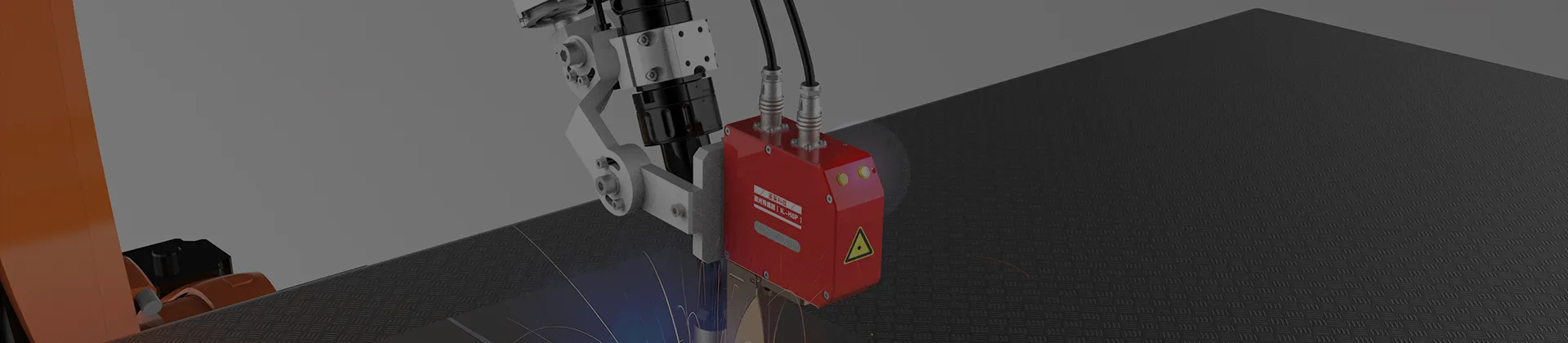
Intelligent-Laser provides laser seam tracking sensors for pipe welding, pressure vessel welding and tube-related applications. Our laser vision systems detect the real seam position before welding and provide real-time correction data during welding, helping the welding torch, laser head or welding carriage follow the actual joint accurately.
Intelligentlaser laser tracker sensor can be applied to Pipeline or tubes applications which are usually made of shinny material or carbon steel.
The welding process varies: there are laser welding, SAW or mig or mag. Therefore, models can be different according to the joint types. There would be corner joint, lap joint, butt joint and circle joint and groove, etc. The welding robot can be kuka with external axis, KAWASAKI with weaving, Yaskawa, and PLC with XY linear etc.
Pipelines, cylinders, tanks, headers, tubesheets and pressure vessel assemblies may include carbon steel, stainless steel, coated materials and reflective metal surfaces. Common welding challenges include:
● Part-to-part variation in pipe diameter, ovality and joint fit-up
● Misalignment between pipe sections, shells, nozzles or reinforcing parts
● Changing root gap, edge offset and groove geometry
● Longitudinal seams and circumferential welds that require stable positioning over long travel distances
● Welding heat that can cause distortion and change seam position during the process
● Complex workpiece movement on positioners, rollers, external robot axes or rotating welding equipment
● The need to reduce dependence on highly accurate fixtures and repeated manual robot teaching
A laser seam tracking sensor measures the actual joint rather than relying on the nominal part position. The resulting seam data can be used to correct the welding path and improve the consistency of robotic or mechanized welding.
Intelligent-Laser seam tracking solutions can be applied to:
● Pipe butt welding and pipe girth welding
● Circumferential welding of cylinders, tanks and vessels
● Longitudinal seam welding of pressure vessel shells
● Nozzle-to-shell, flange-to-pipe and branch pipe welding
● Tube-to-tubesheet and tube-related assemblies
● High-pressure gas tanks and storage vessels
● Steel-plastic composite pipe production
● Air pump cylinders, hydraulic cylinders and industrial tank components
● Reinforcement ring, stiffener and structural attachment welding
The system can be configured for straight seams, circular seams, grooves, butt joints, lap joints, corner joints, fillet joints and other joint profiles based on the actual welding task.
For pipe and pressure vessel welding, both pre-weld seam finding and online seam tracking can be important.
Before welding, the sensor scans the workpiece and identifies the actual joint position. This information can be used to correct the initial robot path, compensate for workpiece placement variation and reduce setup time for different batches.
During welding, the laser vision sensor tracks the seam in front of the welding position. It continuously sends seam position and profile data to the robot or machine controller. The welding path can then be corrected in real time as the workpiece moves, rotates or changes due to heat input.
This approach is particularly valuable for circumferential weld tracking, pipe girth welding and long seam welding, where even small deviations can accumulate over a large travel distance.
Our pipe welding seam tracking systems can support a range of welding processes, including:
● Laser welding
● MIG welding
● MAG welding
● Submerged arc welding, or SAW
● TIG welding, depending on the application
● Robotic welding and dedicated pipe or vessel welding equipment
The best sensor configuration depends on the joint type, material, surface condition, welding method, working distance, required detection range and production speed.
Intelligent-Laser laser vision systems can be integrated with industrial robots, welding positioners, external axes, rotating equipment and PLC-controlled welding machines. Typical configurations include KUKA robots with external axes, Kawasaki robots with weaving functions, YASKAWA robots, as well as XY linear platforms and customized automatic welding systems.
Our team supports the complete integration process, including application review, sensor selection, mechanical mounting, communication interface setup, robot or PLC connection, welding test and commissioning support.
For pipe and pressure vessel manufacturers, seam tracking helps transform a fixed-path welding system into a more adaptive automation solution. It enables the welding equipment to respond to normal workpiece variation and changing seam conditions while maintaining accurate weld placement.
Intelligent-Laser can provide a customized solution based on your workpiece drawings, joint samples, material, welding process, robot model and production requirements.
Looking for a seam tracking solution for pipe, tank or pressure vessel welding?
Share your joint drawings, workpiece dimensions, welding process and automation layout. Our engineers will evaluate the application and recommend a suitable laser vision seam tracking configuration.
Let Us Provide a Professional Solution for You Today
Our experienced team can provide customized service to all kinds of projects. Also, we provide 24/7 aftersale service.
Our aim is to make sure all customer can use the laser sensor after receiving it instead of put it in the box.