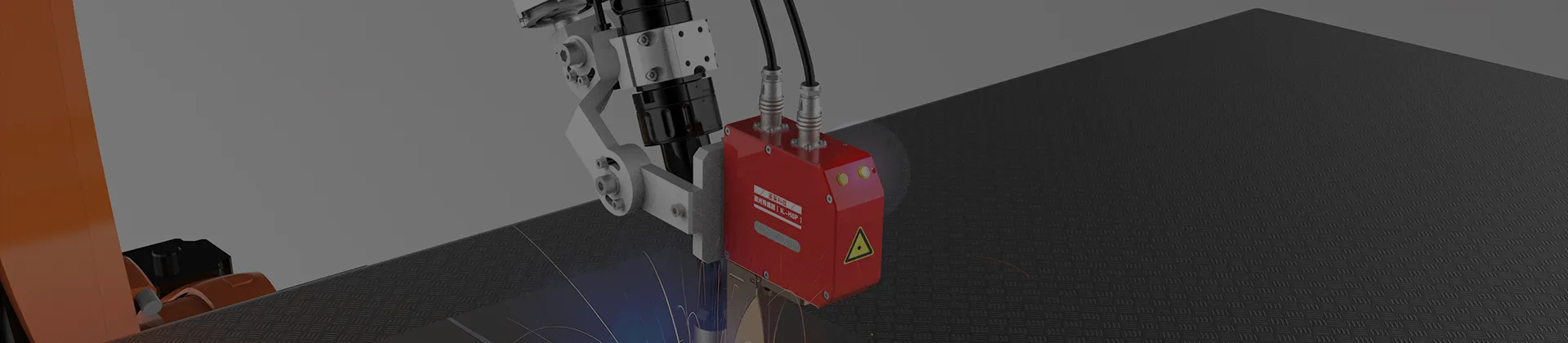




Laser welding's 10x faster speeds versus arc welding come with a catch: microscopic errors become catastrophic failures. From aerospace turbine blades to medical device hermetic seals, Yinglai Technology's data reveals how uncontrolled variables sabotage results—and how next-gen sensors mitigate them.

Beam Misalignment: A 0.2mm focal shift cuts penetration depth by 40% (Journal of Laser Applications, 2024).
Keyhole Instability: Vapor cavity collapse causes porosity in 1 of 3 deep-penetration welds.
Reflective Material Challenges: Aluminum's reflectivity varies up to 65% during processing.
Seam Tracking Lag: Traditional systems update too slowly for >3m/min welding speeds.
Hyperfast Tracking: 500Hz sampling rate keeps pace with 6kW fiber lasers
Multi-Spectral Analysis: Dual-wavelength lasers overcome reflectivity fluctuations
Closed-Loop Control: Live penetration depth monitoring via plasma plume spectroscopy
FAQ
1. What is a Laser Seam Tracking System?
A Laser Seam Tracking System is a technology used to improve the precision of laser welding by monitoring and adjusting the position of the weld seam in real time.
2. Why do misalignment issues occur?
Misalignment can occur due to improper setup, equipment wear, or variations in material dimensions.
3. How does thermal distortion affect welding?
Thermal distortion can alter the shape of the welded parts, leading to defects and weak connections.
4. How can I prevent inconsistent laser intensity?
Regular maintenance of equipment and using a tracking system can help maintain consistent laser intensity during welding.
Latest Blogs
23
Sep. 2026
Laser Vision Seam Tracking Sensor: Features and Advantages
A Laser Vision Seam Tracking Sensor projects a laser line or uses optical imaging to detect the actual weld-joint position, then sends correction data to a robot, PLC, or welding head. I use this technology when programmed robot paths cannot compensate for fixture tolerance, part distortion, or changing seam geometry.


12
Aug. 2026
Choosing the Right Seam Tracking Sensor for Your Production Line
Choosing the right seam tracking sensor is essential for modern production lines. Many manufacturers face challenges with inconsistent seams, which can lead to defects in products. Seam tracking sensors help in maintaining alignment during the manufacturing process. These sensors play a crucial role in improving quality and reducing waste.

27
Jul. 2026
Laser Vision System for Robotic Welding Applications
The Laser Vision System is revolutionizing robotic welding applications. Robotic welding often faces challenges such as precision and speed. A Laser Vision System improves accuracy by using advanced detection and measurement technologies. This system ensures that the welding process is precise, reducing errors and enhancing efficiency.
Let Us Provide a Professional Solution for You Today
Our experienced team can provide customized service to all kinds of projects. Also, we provide 24/7 aftersale service.
Our aim is to make sure all customer can use the laser sensor after receiving it instead of put it in the box.