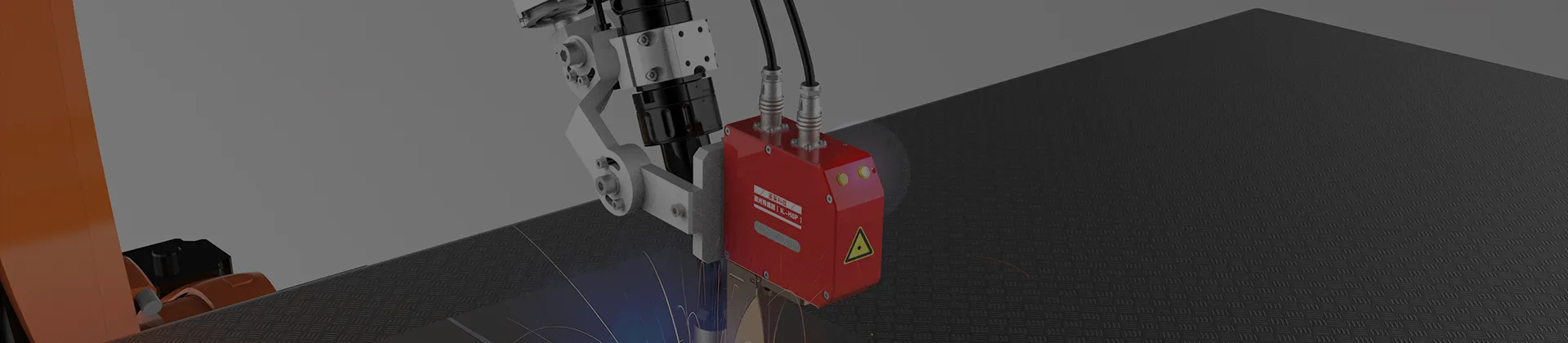




The Laser Vision System is revolutionizing robotic welding applications. Robotic welding often faces challenges such as precision and speed. A Laser Vision System improves accuracy by using advanced detection and measurement technologies. This system ensures that the welding process is precise, reducing errors and enhancing efficiency. With the rise of automation in industries, the demand for reliable and effective welding solutions is more significant than ever.
The Laser Vision System enhances robotic welding by improving accuracy, reducing defects, and increasing production efficiency. It uses laser-based technology to ensure that welds are precise and consistent, which is crucial in manufacturing industries.
The Laser Vision System offers greater precision than traditional methods. This technology uses lasers to measure distances and angles accurately. For instance, a study showed that using lasers improved weld accuracy by 25% compared to older systems.
With a Laser Vision System, robots can work faster. The system quickly assesses the welding environment to ensure the robot can make adjustments in real time. A faster process means lower costs and higher output.
Automating the welding process with a Laser Vision System can decrease the need for manual labor. Companies can save money on workforce costs. Moreover, it allows workers to focus on more complex tasks.
First, the Laser Vision System scans the workpiece using a laser beam. The system records various data, including dimensions and surface quality.
Next, the collected data is analyzed in real time. The system uses this information to guide the robotic welder precisely. Adjustments can be made instantly based on the analysis.
Finally, the robotic welder performs the welding based on the processed data. This process ensures high-quality welds, minimizing rework and defects.
| Feature | Laser Vision System | Traditional System |
|---|---|---|
| Accuracy | High - 25% more precise | Moderate |
| Speed | Fast - Real-time adjustments | Slower - Manual adjustments required |
| Cost Efficiency | High - Lower labor costs | Low - Higher manual costs |
The Laser Vision System significantly enhances robotic welding applications. By increasing precision, speed, and cost-efficiency, it meets the modern manufacturing industry\'s demands. As industries continue to evolve, incorporating such advanced systems is critical for success.
Industries like automotive, aerospace, and electronics benefit greatly from these systems. They require high precision and efficiency in their manufacturing processes.
It improves welding quality by ensuring that the welds are properly aligned and of the right depth. This reduces the chances of defects and rework.
Yes, most laser vision systems are designed to integrate easily with existing robotic welding machines, making the transition smoother.
Latest Blogs
23
Sep. 2026
Laser Vision Seam Tracking Sensor: Features and Advantages
A Laser Vision Seam Tracking Sensor projects a laser line or uses optical imaging to detect the actual weld-joint position, then sends correction data to a robot, PLC, or welding head. I use this technology when programmed robot paths cannot compensate for fixture tolerance, part distortion, or changing seam geometry.


12
Aug. 2026
Choosing the Right Seam Tracking Sensor for Your Production Line
Choosing the right seam tracking sensor is essential for modern production lines. Many manufacturers face challenges with inconsistent seams, which can lead to defects in products. Seam tracking sensors help in maintaining alignment during the manufacturing process. These sensors play a crucial role in improving quality and reducing waste.

27
Jul. 2026
Laser Vision System for Robotic Welding Applications
The Laser Vision System is revolutionizing robotic welding applications. Robotic welding often faces challenges such as precision and speed. A Laser Vision System improves accuracy by using advanced detection and measurement technologies. This system ensures that the welding process is precise, reducing errors and enhancing efficiency.
Let Us Provide a Professional Solution for You Today
Our experienced team can provide customized service to all kinds of projects. Also, we provide 24/7 aftersale service.
Our aim is to make sure all customer can use the laser sensor after receiving it instead of put it in the box.