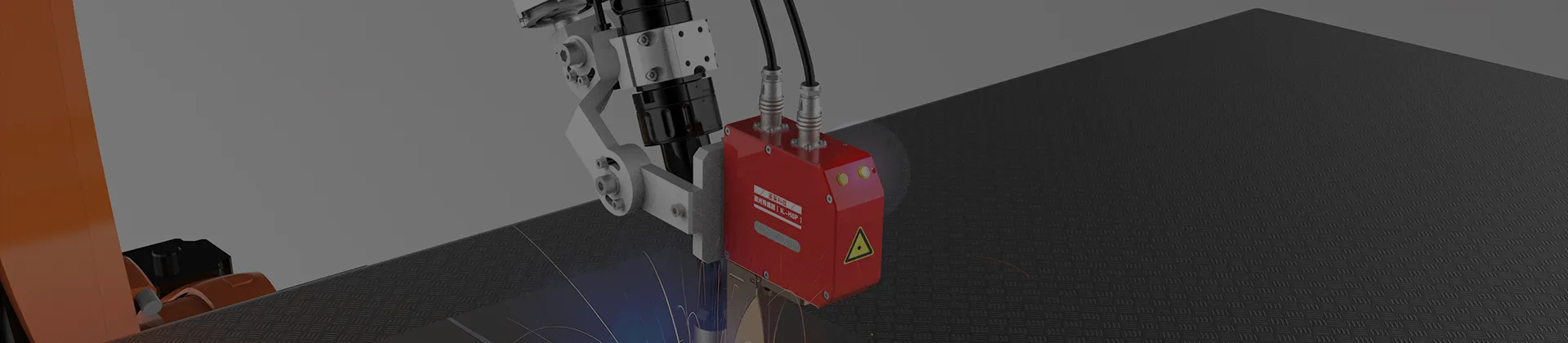




Modern manufacturing increasingly relies on automation to improve productivity, consistency, and product quality. In industries such as automotive manufacturing, aerospace, shipbuilding, heavy equipment production, and metal fabrication, welding remains one of the most critical production processes. As welding automation becomes more advanced, the demand for accurate and reliable Laser Seam Tracking technology continues to grow.
A high-performance Laser Seam Tracking System enables welding robots to accurately follow weld joints in real time, ensuring precise weld placement even when workpieces shift or vary during production. Choosing the right solution can significantly improve weld quality, reduce rework, and increase overall manufacturing efficiency.
As manufacturers move toward Industry 4.0 and smart factories, robotic welding systems are becoming standard equipment on production lines. However, even the most sophisticated welding robot can only perform as accurately as the information it receives.
Small deviations in part positioning, thermal distortion, material inconsistencies, or fixture tolerances can lead to welding defects. This is where Laser Seam Tracking technology plays a vital role.
A laser seam tracking sensor continuously scans the weld joint ahead of the welding torch, providing real-time positional data to the robot controller. The system automatically adjusts the welding path to compensate for variations in seam location and geometry.
The result is:
● Improved weld accuracy
● Reduced welding defects
● Increased production throughput
● Lower material waste
● Reduced labor costs
● Enhanced product reliability
Advanced robotic welding systems increasingly rely on laser-based sensing because traditional manual inspection and adjustment methods cannot keep pace with modern manufacturing speeds. Research in robotic welding also highlights active visual sensing technologies as essential tools for intelligent and autonomous welding applications.
A Laser Seam Tracking System typically consists of several integrated components:
● Laser sensor or laser profiler
● Image processing software
● Real-time control algorithms
● Robot communication interface
● Data collection and analysis platform
The laser projects a line or pattern onto the workpiece surface. Cameras or sensors capture the reflected laser image and analyze changes in profile geometry. The system identifies the weld seam location and calculates the necessary corrections for the welding robot.
Modern systems can perform these measurements thousands of times per second, enabling real-time path correction even during high-speed welding operations.
This capability is particularly important in laser welding applications, where the weld area is often extremely narrow and requires highly accurate positioning. Real-time seam tracking helps ensure proper torch alignment throughout the welding process.
One of the first considerations when selecting a laser seam tracking solution is the operating environment.
Welding environments can be challenging due to:
● High temperatures
● Welding spatter
● Smoke and fumes
● Dust contamination
● Electromagnetic interference
● Vibrations
These factors can affect sensor performance and measurement accuracy.
A robust Laser Seam Tracking System should be specifically designed to operate reliably under harsh industrial conditions. Sensors with strong resistance to noise and environmental disturbances are essential for maintaining measurement stability throughout production cycles.
Accuracy is often the most critical factor in seam tracking performance.
Even slight tracking errors can result in:
● Poor weld penetration
● Incomplete fusion
● Excessive reinforcement
● Structural weaknesses
● Increased scrap rates
Manufacturers should evaluate:
● Sensor resolution
● Repeatability
● Measurement accuracy
● Profile capture rate
● Detection sensitivity
High-speed laser profilers capable of capturing detailed surface profiles can identify even minor seam deviations. The ability to detect subtle geometric variations allows robotic welders to maintain optimal positioning throughout the weld path.
Not all seam tracking technologies offer the same response speed.
In high-volume manufacturing environments, production lines operate at increasingly fast rates. The selected solution must be capable of:
● High-speed scanning
● Instant data processing
● Rapid robot path correction
● Continuous seam monitoring
Real-time responsiveness ensures the welding torch remains accurately aligned with the joint despite variations in material positioning or seam geometry.
A high-performance Laser Seam Tracking System should deliver stable operation without introducing latency that could compromise weld quality.
Manufacturers should carefully assess whether their application requires 2D or 3D measurement technology.
2D Laser Profiling
2D systems measure cross-sectional profiles and are suitable for many standard welding applications.
Advantages include:
● Lower system complexity
● Faster implementation
● Cost-effective deployment
3D Laser Profiling
3D systems provide more comprehensive surface information and are often preferred for:
● Complex weld geometries
● Curved surfaces
● Multi-pass welding
● Advanced quality control applications
● Detailed weld bead analysis
As production requirements become more demanding, 3D sensing capabilities can provide greater flexibility and long-term scalability.
Many manufacturers seek to upgrade existing welding cells rather than replace entire production lines.
Therefore, seamless integration becomes a major selection criterion.
An ideal Laser Seam Tracking solution should support:
● Major robot brands
● PLC communication protocols
● Industrial Ethernet networks
● Manufacturing execution systems (MES)
● Quality management platforms
User-friendly software can significantly reduce commissioning time and simplify maintenance procedures.
Manufacturers should also evaluate the availability of technical support, training resources, and future scalability when choosing a supplier.
Modern welding operations increasingly rely on data-driven decision making.
Today's advanced Laser Seam Tracking Systems do more than simply guide welding robots.
They can also:
● Record seam geometry
● Store inspection results
● Monitor process stability
● Generate quality reports
● Support traceability requirements
● Enable predictive maintenance
This information creates a digital record of every weld, helping manufacturers identify process trends, reduce downtime, and improve overall production efficiency.
Data-driven welding systems are becoming a key component of smart manufacturing strategies across multiple industries.
Beyond seam tracking, many manufacturers now seek integrated quality inspection functionality.
Advanced laser profilers can inspect weld beads immediately after welding to verify:
● Weld width
● Weld height
● Surface consistency
● Crack presence
● Porosity indicators
● Undercut defects
● Reinforcement levels
This combination of seam tracking and quality inspection provides a comprehensive welding quality solution.
By identifying defects early, manufacturers can reduce downstream repair costs and prevent defective products from reaching customers. Modern laser profiling technology is increasingly used for weld seam inspection because of its precision and ability to detect defects that may be difficult to identify through conventional methods.
Automotive production requires high-volume welding with extremely tight tolerances.
Applications include:
● Body-in-white assembly
● Chassis welding
● Battery tray welding
● Exhaust system manufacturing
Aerospace manufacturers demand exceptional weld quality and complete process traceability.
Laser seam tracking supports:
● Structural component welding
● Engine component fabrication
● Precision alloy welding
Large fabricated structures often experience dimensional variations that make manual welding difficult.
Laser tracking systems improve consistency in:
● Construction machinery
● Agricultural equipment
● Mining machinery
Large-scale weld seams and complex geometries make automated seam tracking particularly valuable for shipbuilding operations.
The future of Laser Seam Tracking is closely linked to advancements in artificial intelligence, machine vision, and industrial automation.
Emerging technologies include:
● AI-assisted weld path optimization
● Machine learning-based defect prediction
● Enhanced 3D vision systems
● Digital twin integration
● Cloud-based welding analytics
● Fully autonomous robotic welding cells
As manufacturing becomes increasingly connected, seam tracking solutions will continue evolving from simple sensing devices into intelligent process management platforms.
Selecting the right Laser Seam Tracking System requires a careful evaluation of welding requirements, environmental conditions, measurement accuracy, integration capabilities, and long-term production goals.
The most effective solutions provide more than seam detection alone. They deliver real-time tracking, advanced data analysis, weld quality verification, and seamless integration with modern automation systems.
As manufacturers continue pursuing higher productivity, improved quality, and greater operational efficiency, investing in a reliable Laser Seam Tracking solution will remain a critical factor in achieving competitive advantage in automated welding operations.

Latest Blogs
23
Sep. 2026
Laser Vision Seam Tracking Sensor: Features and Advantages
A Laser Vision Seam Tracking Sensor projects a laser line or uses optical imaging to detect the actual weld-joint position, then sends correction data to a robot, PLC, or welding head. I use this technology when programmed robot paths cannot compensate for fixture tolerance, part distortion, or changing seam geometry.


12
Aug. 2026
Choosing the Right Seam Tracking Sensor for Your Production Line
Choosing the right seam tracking sensor is essential for modern production lines. Many manufacturers face challenges with inconsistent seams, which can lead to defects in products. Seam tracking sensors help in maintaining alignment during the manufacturing process. These sensors play a crucial role in improving quality and reducing waste.

27
Jul. 2026
Laser Vision System for Robotic Welding Applications
The Laser Vision System is revolutionizing robotic welding applications. Robotic welding often faces challenges such as precision and speed. A Laser Vision System improves accuracy by using advanced detection and measurement technologies. This system ensures that the welding process is precise, reducing errors and enhancing efficiency.
Let Us Provide a Professional Solution for You Today
Our experienced team can provide customized service to all kinds of projects. Also, we provide 24/7 aftersale service.
Our aim is to make sure all customer can use the laser sensor after receiving it instead of put it in the box.